SORRY, NO SNAKES AND LIZARDS FOR DINNER

Among other things, people do have the strangest of questions on their mind when it comes to food from north east (of India, just in case you got confused with the north east of China, Africa or the antipodes). In fact, I have often replied the polite enquiries of my colleagues of what I was cooking for dinner with a cold glare. I was bored of explaining time and again that Assamese food also  consisted of dal chawal, arguably the most common Indian meal.


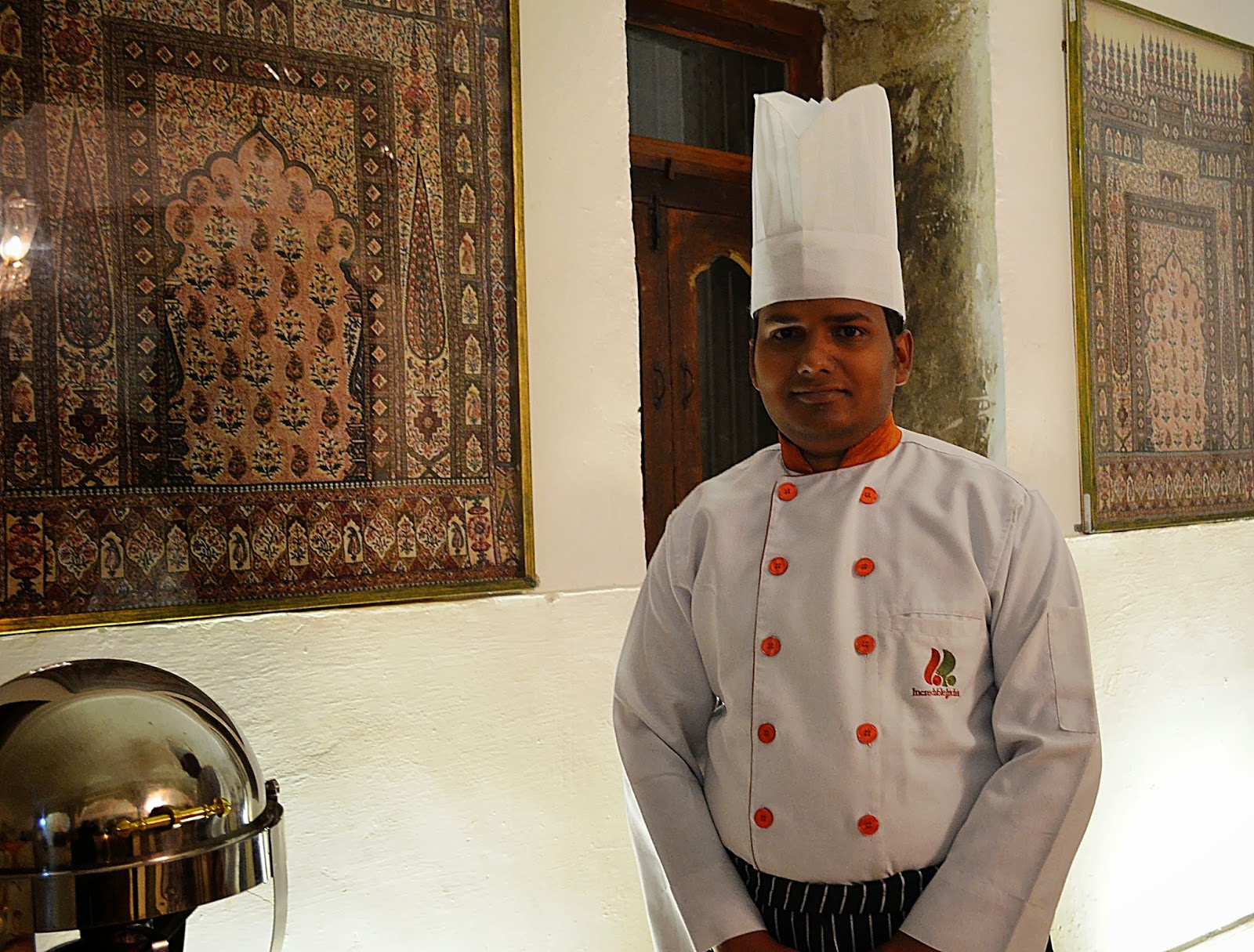
But when I pondered over this topic deeper, I realised this lack of information was actually a lack of the availability of the food itself in other parts of the country. Rosang Café is an exception in this regard. For all those who have no clue what food from north east is like, do head to Rosang Cafe. Located near Upahar Cinema in Green Park, it brings the finest food of the seven north eastern states.

Jokes apart, despite being an Assamese, I myself have limited knowledge about the north eastern cuisines. I am desperately trying to rectify this problem by visiting Rosang frequently. While I would highly recommend the place to everyone, here are a few things to keep in mind before trying out food from north east.

#1. North eastern food is light on your taste buds and tummy. Not excited? Then try the piping hot dry fish chutney!

#2. Some of the dishes may have strong aromas, often not so pleasant if you aren't used to it. Come prepared.

#3. All the dishes are extremely healthy. Do tell your trainer about it.

#4. It’s not only about noodles and momos. What were you expecting a chocolate momo or a paneer one?

#5. Do not expect it to be spicy and oily. But count on it to be flavoursome.

#6. For God's sake don't come and ask for a roti or naan. Didn't you know the best thing on earth is rice?

#7. You think it will be like Chinese and Thai. You couldn't be more wrong. The spices, herbs and process of preparing the dishes are all different.

#8. Vegetarians are welcome too. We don’t sit at the slaughterhouse 24 x 7.

#9. The curries won’t look red; turmeric is not a favourite here. Did you say you already knew it?

#10. Taste a new vegetable like kol posola (banana stem). You’ll soon realise vegetables go beyond cauliflowers and peas.
·        


While trying food from north east, please do remember that they are seven states not one. This is another problem I want to deal with it. But let’s just stick to the food here. Being neighbouring states the cuisines of the north eastern states do have similarities, however, they are as varied as the seven states and the people living in them are. Thankfully, Rosang Café picks some of the best dishes from the seven states.

Go with an open mind. Do try the spicy Dry Fish Chutney, Aksa Meh a delicious chicken curry, Fried Fish in Burmese paste and Dohneiihong, a Meghalayan pork dish cooked in black seasame seeds. Yes, the names are difficult. But admit it they can’t be more difficult than that of the Thai, Mexican or French dishes.

Enjoy the hospitality of the super friendly owner, Mary. And hopefully you’ll get to understand that part of the country slightly better.

P.S. These pictures have been taken on a mobile phone by a not so great photographer. The food actually looks much better than this.


GOING THE GWALIOR WAY


Gwalior is often considered the poor cousin when compared to the likes of Shimla, Manali, Nainital. At times, it is not even in the consideration set. But if you dig forts, palaces and ancient love stories, Gwalior should be high on your priority list. More so, if you are running out of weekend getaway ideas.


Last month, I spent a weekend at Gwalior. Needless to say, a weekend is not sufficient for a place like Gwalior. Me and my friend were dead tired and there was still so much left to see. On the contrary, if you are up for a stamina crunching trip, even a weekend might suffice.

Here is a quick snippet on what to expect on a Gwalior trip.

Stay

Gwalior doesn't have many hotels; at least my internet search at the time didn't say so. However, it has a few budget hotels like Hotel Landmark, Hotel Grace and a few two star hotels. On the other hand, if you don’t mind spending some money don’t look beyond Deo Bagh, a Neemrana Hotel. It’s an idyllic setting to relax and to some extent a destination in itself.


Originally a summer palace of the ruling dynasty, this hotel has a range of rooms each overlooking a lush green lawn and two quaint 17th century temples on the horizon. All the rooms have been named after the royal family members like Jayaji Villas, Aruna Villas, Rohini Raja Mahal, Dhruv Villas etc. Read more about them here http://deobagh.neemranahotels.com/. Ironically, not a single auto wallah at the railway station knew anything about the hotel.


See

If you are a sightseeing kind of person, there is a plenty waiting for you. Keep a day aside for supposedly the largest of its kind - Gwalior Fort, the outer boundary of which stretches as far as 3.5 km. Also come prepared for a long trek, as the autos are not allowed to enter the fort premises. 


Inside the fort are Gujari Mahal, an Archeological Musuem, Man Mandir Palace, Saas Bahu Temple, Teli ka Mandir, Jahangiri Mahal, Karan Mahal, Shahjahan Mahal, Jauhar Kund, Suraj Kund, a Gurudwara, a chapel and even more.


If you have to choose between the monuments due to paucity of time, then settle down for the Man Mandir Palace and the Saas Bahu Temple. Both of them are exquisite to look at and the best that the fort has to offer in terms of architecture.


Just like the history of the city, Gwalior architecture is an interesting mix of mughal, deccan and hindu designs. You will be able to see glimpses of this everywhere you go.


The other two must visit places in the city are the Jai Vilas, erstwhile palace of the Scindihias and Tansen Ka Maqbara. While the former is standing there in all its glory, the Tansen’s tomb could have been better maintained. The fact that the entry to the Maqbara is free and also that it is in a bustling market area has transformed the place. At best it is comparable to a local park where people feel free to come and sleep. Despite the indifference of the government, Tansen’s resting place manages to give its visitors what they come seeking – peace. In fact, both I and my friend were anxious about spending so less time at such a beautiful place. Given a choice, we would have happily spent the entire day dreaming there.


On the other hand, the pristine white Jai Vilas that has often been shown as the home of heroes and heroines in films of the 80’s has now been turned into a museum. The rooms of the palace are still laid out as they were used once upon a time, each of them with a unique colour scheme and a magnificent story to tell. Some parts of the palace continue to be used by the royal family even today.


Do give the Kala Vittika and the Light and Sound Show a miss. The Kala Vittika has absolutely nothing inside and the Light and Sound Show is way too outdated with almost no lighting and graphics. In fact, those who have seen the one at Delhi Old Fort will not even call it a Light and Sound Show.

Eat                                                                                                            

Sorry to say food lovers, there is not much to eat here. The food at the Deo Bagh was average, and beyond that we couldn't find anything. There are few dhabas lined up near the railway station that dish up spicy stuff. But they can hardly be called sumptuous. Also it will be best to stick to vegetarian food, as majority of the people at Gwalior seem to be vegetarian.


 Feel

Gwalior is full of interesting stories. The fort itself was built by Raja Surya Sen when sage Gwalipa cured him of leprosy. Again Raja Man Singh fell in love with a tribal girl named Gurjari whom he named Mrignayani. It is said that Mrignayani’s love for her husband was such that even Emperor Akbar couldn't do anything. After conquering the Gwalior Fort, when he took her to his Agra harem she continued to love her husband even after many days and refused to comply. Seeing her dedication for her love, the emperor reunited her with Raja Man Singh.


So, the next time someone says there is not much to see or do you know what your answer should be.


WHEN THE CLASSIC MEETS THE ROCKING


This 22nd of December, Assam Association celebrated the 150th birth anniversary of Laxminath Bezboroa. The event took place at the renowned Siri Fort Auditorium. I am not much of a music lover myself. However, I decided to go ahead with the show for lack of anything better to do.

The event started off with a chorus “Aami Asomiya Nohou Dukhiya” a composition by Beboroa. A common refrain throughout the programme was remembering the contributions of this illustrious son of the state, who explored almost every possible form of writing and gave Assamese language a new identity. Apart from that, the pertinent question was how we can keep alive the language with the newer generations, especially with those kids who live away from their motherland.

Quite interestingly, the line up of the function consisted of the second generation of artists. The first being, Amaan Ali Khan and Ayaan Ali Khan, both sons of Amjad Ali Khan and Subhalaxmi Khan. Mrs. Khan, a classical danseuse happens to belong to Assam. And the second being, Angarag Mahanta with his band East India Company. Angarag is the son of popular Assamese singer Khagen Mahanta. While both the Khan brothers and Papon have an association with Assam, the similarity ends there. The music they represent and their presentation were poles apart.

Spiritual Conquest
It was heartening to see the audience maintain a pin drop silence throughout the performance of Amaan and Ayan. While Amaan came across as a serious and disciplined performer and Ayaan was more on the flamboyant side. The jugalbandi that both of them created along with their companions was amazing.
It’s only when you watch a classical performance you realize, the amount patience and riyaas that goes into a recital. I deeply regretted the fact that my understanding of classical music was so limited. I am a trained Bharatnatyam dancer myself. However, I still do not understand the ragas well.

After a point of time, my ignorance got the better of me and I found the music repetitive. I cursed myself silently for not being able to enjoy true talent. I could only appreciate the highs and lows of it. Sadly, my opinion was also the opinion of my friends present in the hall. Despite that the audience maintained perfect decorum throughout their performance.

The performance continued non-stop for about an hour. It would not be wrong to say that we were transported to a different spiritual level altogether. Needless to say, that it ended with a thunderous standing ovation.

Power of Rock
The next performance was that of Angarag and his band. The crowd welcomed him with loud cheers. Angarag is consummate performer, his body language confident, his voice captivating. From the moment he appeared on the stage till the time the show ended, no one looked anywhere else. He belted out his popular numbers from his albums, Coke Studio and some Bollywood songs. He handled every cat cry every demand comfortably. And when a young fan declared her love for him he replied with great panache that he loved her too.

Before long, he had every one on their feet and the ‘sitting comfortably auditorium’ became something close to a rock concert.

Two Worlds in One Universe
In the aftermath of the show, it wouldn’t be wrong to say that his rocking performance which had everyone on their feet overshadowed the standing ovation that the Khan brothers received. It brings to forefront an important question, how we as an audience should appreciate art? Do we know how to take our culture forward?

In this regard, Papon aptly said that we have to present our culture to the younger generation in a way that is not imposing. His songs, his music truly reflects his thoughts. Be it Boitha Maaro or his version of acoustic folk Bihu, it all spells his belief.

And yet, we cannot underestimate the magic of something pure. Perhaps, the best way to judge them is to understand that they represent two different worlds. One has the remarkable power to instill a rare stillness in the otherwise restless audience, and the other has the magic to get everyone up on their feet. While there is place for the popular there is also place for the classical. And in tandem, they become a whole that is our culture.  


WHAT DELHI HIDES IN IT'S HEART

Ever fascinated with ancient monuments, when I heard about this place I was very excited. I immediately googled about it and read up whatever was available. Strangely, even though it is in the heart of the city, not many people know about Ugrasen or Agrasen Ki Baoli.

Again, there is no general consensus as to who built this historical stepwell. The popular belief however, holds that it was built by the Raja Agrasen of the agarwal community in the pre Lodhi period to preserve water.


In December 2012, I had visited another step well, Anangtal Baoli, located in Mehrauli. It had been a memorable trip with two of my friends. Something I had wanted to repeat soon but hadn't got the chance.

Baavris at Baoli
Then one fine day, me and a friend, who is equally gung ho about quaint places, eagerly set off for the Ugrasen Ki Baoli. The place is located inside a tiny lane called Hailey lane on Hailey Road in CP. The fact that it can be easily reached by an auto or by the metro made us too happy. For your information, the closest metro station is Barakhamba or Rajiv Chowk.


Quite interestingly, the road that leads to the Baoli has graffiti art all over. It’s a stark contrast to what awaits a visitor inside. The entrance to the Baoli is very unassuming and low key, with a very small courtyard leading in. See more pictures of the Baoli here.

When we entered the place, we met the usual crowd that greets you at all Delhi Heritage sites. College kids, photographers, love birds and a few elderly people who visit the place to crib about the rest of the visitors.

The moment we reached the Baoli, I went ahead on my snap happy spree and my friend became my muse for the day. The light however, was not very favourable. The deeper we went into the well, the worse the pictures turned out.


Simplicity at its best
It is a relatively simple structure, consisting of a single flight of 103 steps that culminate in a now dry water tank. The stone walls of the well are stark yet beautiful, forming a 60 x 15 meter rectangle made up of a series of superimposed arcades.

As you go down the steps, the silence deepens. The air too becomes putrid with the smell of bat shit, making one wonder what we are doing to preserve such places. However, all is not lost. Unlike other places, this Baoli did have some caretakers who if nothing else saw to it that people don’t enter the restricted areas.


Walkways interrupt the walls at three levels, allowing the visitor to explore various alcoves and rooms. Today, the more hazardous of these rooms are secured with gates. One can easily see the craftsmanship and the intricate work on the ceiling of the dome. It’s a pity however, that most of it is in a poor condition.
Many years ago, this Baoli must have been a solace for people suffering because of the summer heat. There used to be water in the Baoli till as recently as 2001. Lovers threw coins to wish for something, boys threw pebbles and the birds alighted for cool dip.


As with all relics, the silence was all encompassing making it hard to believe that this place is so close to the commercial capital of Delhi. The only giveaway is the skyscraper which outlines the horizon seen from the Baoli.
While people have deserted this place to a great extent, the wise have taken abode. Every nook and cranny of the Baoli has been taken over by the pigeons. Now it is their world.

If you ever visit the Baoli, do look out for a mosque nearby. Unfortunately, I couldn’t make the time to visit this place. Instead, me and my friend preferred to walk down the Hailey Road which itself is quite a nice place for a walk.

HAPPY NEWEST YEAR


A TRIP FOR THE TASTE BUDS

Those who have been thinking of visiting Karims in Old Delhi, there is another option to try out. Many of you might already be aware of it. The eaterie referred to here Al Jawahar. It is located in the same lane as Karims, opposite Jama Masjid and is much more pocket friendly.

I happened to be in Old Delhi last week and couldn't return without visiting Al Jawahar. I strongly recommend the vegetarians to stay away from the place. As the way to the restaurant is lined with not so appetizing sights of non veg food.


The restaurant has three floors, the 2nd floor of which has been marked for families. I and my friends decided to settle in the 2nd floor. They have all the regular Mughlai food from Chicken Jahangiri to Mutton Roganjosh from Sheermaal to Shami Kebabs.

Not much can be said about the ambience and the presentation. The crockery looked old and dirty, the paper napkins were of the poorest quality possible. However, the food more than compensated for the lack of everything else. We ordered Shami Kebabs, Chicken Qorma, Palak Gosht and Roomali Rotis. The portions were good. Ordering half plate makes sense as it allows you to try two dishes in the price of one full plate. They also served complimentary salad.


THE GIRL WHO MADE TH EKING DANCE TO HER TUNES

The Other Boleyn Girl - Review

Two sisters and as unlike each other as can be. One a shy, fair haired girl. The other bold and dark haired. One longed to be in the simplicity of the country side. The other loved the glamour of the court. Mary and Anne Boleyn make interesting characters for a novel. And their ambition to win the heart of a vain and eccentric Henry VIII makes the novel a gripping read.

The novel is told from the viewpoint of Mary who enters the court of Henry as a fourteen year old lady in waiting to Katherine, Queen of England. She catches the eye of the King, whom she learns to love even though she is already married to William Carey. However, she soon realizes that she is a mere pawn in her family’s ambitious plots. The king’s interest wanes and she is forced to step aside for her best friend 
and rival - her sister, Anne. 


Creating captivating characters 
The triumph of this novel is in Gregory’s skillful handing of her brilliant characters - the two sisters, Henry VIII, Katherine of Aragon, the Duke of Norfolk, Jane Boleyn or even George Boleyn. Each one of them sparkles in their own right. However, Anne’s mysterious character steals the show. Quick witted, temperamental, extraordinarily determined, and almost cruel in her ambition, she is one woman who knew what she wanted and made it against all odds.

At a time when the word ‘divorce’ did not exist, it is she who attempts to think the unthinkable. 
She plants the idea in the King’s mind that Katherine was not a virgin when she married him 
and therefore, he is not married to her. One is almost forced to think that Henry is a mere puppet in her hands not the King of England.

Whether Anne was still a virgin when she got married to Henry is doubtful. However, in the novel she played Henry VIII till he kept coming and then turned him away till he couldn't bear it.
When Mary is pregnant with Henry’s child her mother says, “Thank God Anne has him in her toils. She plays with him like you might tease the queen’s dog. She has him on a thread” and Anne tells Mary that she is going to “hold out till he sees that he has to make me an offer, a very great offer”.


Pace of the narrative
Despite the gripping plot and interesting characters, Gregory’s hold slackens towards the middle of the novel. The long drawn delay in the annulment of the marriage to Katherine, Anne’s bouts of temper, the successive miscarriages all seem repetitive.

Historical accuracy and creative license


The historical accuracy of a number of facts can also be doubted. Whether Mary was the younger sister or the elder is not sure. Mary is worried about sleeping with the King and says to George and Anne, “I don’t know how to do it… You know, William did it once a week or so, and that in the dark, and quickly done, and I never much liked it. I don’t know what it is I am supposed to do.” 
But in truth, Mary was not a naive maid. Before coming to Henry’s court she was in fact a mistress to the King Francis I of France.

Likewise George’s homosexuality and attraction towards Anne is also unclear.


EASY PEASY THREE COURSE MEAL

This is a continuation of my post on my other blog Santa Comes With A Cake. I intended this three course meal to be pan Asian but because of paucity of time had to make improvise. Again not everything has been cooked by me like the Marble Cake and the Shami Kababs.

The Menu
Starters – Spicy Prawn Schezwan & Mutton Shami Kabab
Appetizer –Thai Noodle Soup
Entrée- Chilli Chicken and Chicken Sausages fried Rice
Dessert – Marble Cake in Chocolate Sauce


So let’s start where it starts, that is the starters. I brought a packet of ready to cook  Mutton Shami Kababs from Green Chick. However, had I made it, this is how I would have done it.

Mutton Shami Kabab
Preparation Time – 45 mins
Difficulty Level – Difficult

Mix 200 gms minced mutton with chana dal soaked in water for half an hour. To this mixture add garam masala like cardamoms, cinnamon, cloves, a cup of warm water and salt to taste. Cook till dry. Remove from heat and add chopped ginger, chopped garlic, red chilli powder, garam masala powder, peppercorns, coriander powder and cumin powder. Grind to a fine paste and knead well. Divide the mutton mixture into lemon-sized balls, flatten each ball in the palm of your hand. Shape into kababs and dip in a beaten egg. Heat a tawa and shallow fry the kababs on both sides till golden.

Ideally Shami Kababs should be served hot with chopped onions and green chutney. But since
 I didn't have either of them, I grated mozzarella cheese on top of the kababs. The combination 
turned out to be pretty decent.


Next on the list is Spicy Prawn Schezwan. This was the first time I was making this dish 
and it turned to be surprisingly good. And considering the fact that it needed minimum effort,
 I was really happy with the outcome.


Spicy Prawn Schezwan
Preparation Time – 15 mins
Difficulty Level – Super Easy

Take 200 gms of cleaned and deveined prawns in a bowl and mix it with 3 tsps of Ching’s Schezwan Sauce,  2tsps of white sesame seeds, chopped green chillies and salt. The prawns could be the frozen ones or fresh. After half an hour, heat oil in a pan and break 3-4 dry red chilies in it. Add lots of chopped garlic 
and one onion to it. Saute till golden and then add the marinated prawns to it.
 Fry till the prawns become tender. Garnish with chopped spring onions and serve hot.


My appetizer was a Thai Noodle Soup. Again, I was making it for the first time. I realised that 
I had added too much of noodles to it and the soup was less. Another thing to keep in mind 
while making this dish is that it is better to add the noodles just before you are serving the soup, 
else the noodles tend to soak up the soup.

Thai Noodle Soup
Preparation Time – 30 mins
Difficulty Level – Easy


Boil Ching’s noodles in hot water for 2 mins leaving it Al dente. Run it under cold water and drain. Chop lots of juliennes of carrots, capsicums, onions along with peas, slit green chillies and spring onions. 
Fry 1 tsp of ginger garlic paste in a little olive oil. Stir fry the vegetables with salt and black pepper. Add some prawns tossed in salt and olive oil to the vegetables along with some mixed Thai herbs to it. 
Then mix 5 tsps of coconut milk in a cup of normal water. Add this to the vegetable and bring to boil. Cover and sim for 5 mins. Add the noodles and garnish with chopped coriander and sprind onions.


Next on the list is Chicken Sausages Fried Rice. This is something I thought of in the last minute. If you do not want to serve plain rice or want to avoid making a dal on any other day this recipe could come handy. It just needs three pieces of sausages.

Chicken Sausages Fried Rice
Preparation Time – 15 mins
Difficulty Level – Easy


Wash and soak rice for 5 mins. Drain it properly. Chop sausages in half cm wide pieces. Finely chop french beans, carrots and onions. Also keep a handful of peas ready and slit green chillies. In a pressure cooker add some vegetable oil. Fry the sausages till golden brown, then add the chopped vegetables, green chillies and peas. To this add 3 tsps of Ching’s Miracle Masala. Once the vegetables are done add the drained rice to it and fry for another 5 mins while continuously stirring it. Lastly add salt, pepper, aajinomoto, water, and pressure cook till two whistles. 


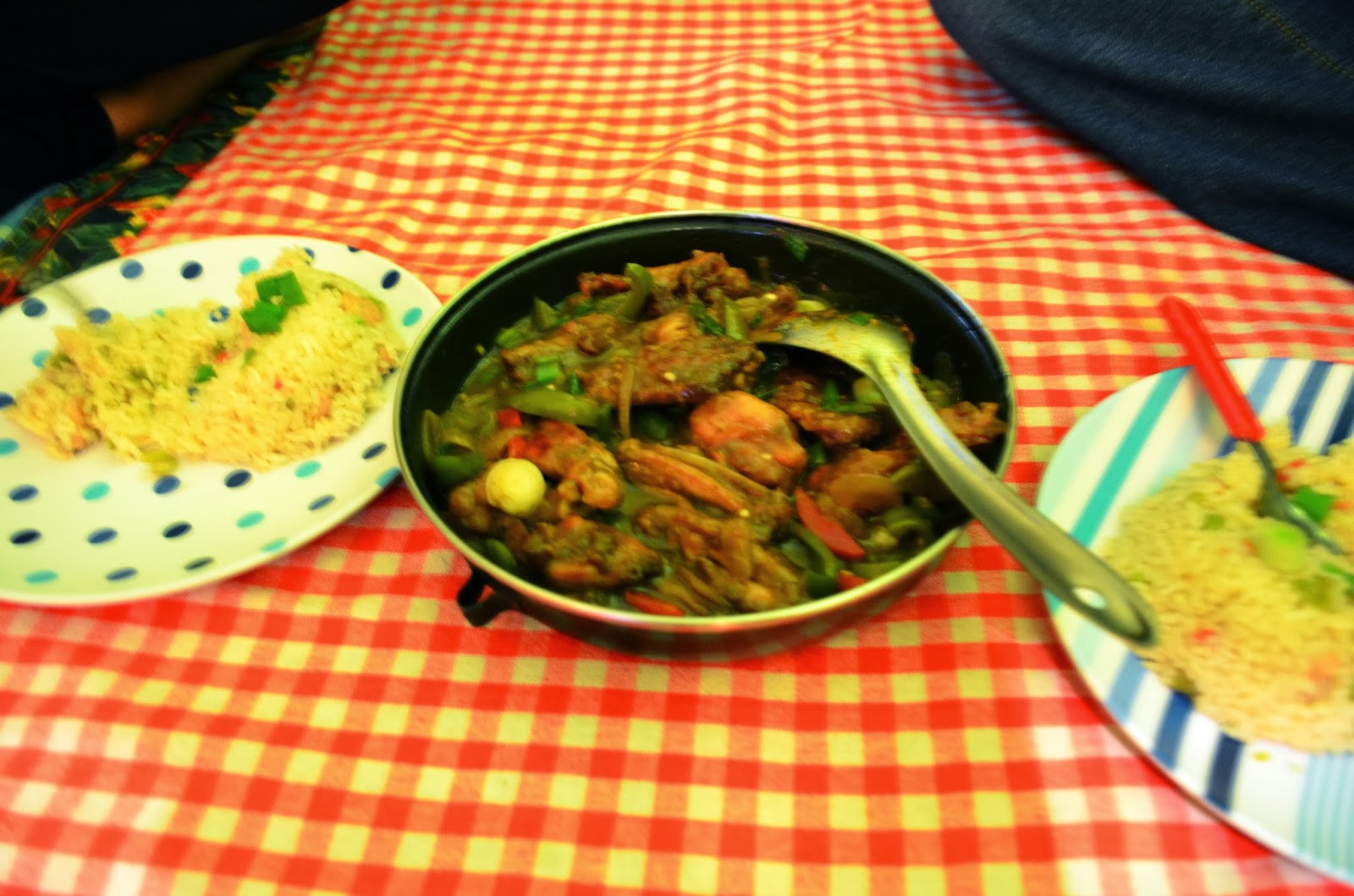
Next in line is the very popular and my personal favourite Chilly Chicken. This version of the recipe is easy to make and tastes as good as those served at eateries. I have used chicken wings for the recipe however, you can give it a shot with boneless chicken as well.


Chilli Chicken
Preparation Time – 45 mins
Difficulty Level – Easy

Marinate the chicken in 4 tsps of soy sauce, 2 tsps of all purpose flour, 2 tsps of cornflour, salt and pepper. Chop capsicums, tomatoes, onions, green chillies, ginger and garlic separately. In a pan add 2 cups of water with 4 tsps of Ching’s Chilly Chicken masala and bring to boil. I like a thicker gravy so, I have added more of the masala. Fry the chicken in olive oil and keep aside to cool down. In the same oil add few dry red chillies followed by the chopped vegetables. Add salt and stir fry for 2 mins. Then add the gravy mixture to it. Bring to boil. Finally add the fried chicken and cover for some time.

THE TUDOR SERIES - THE CONSTANT PRINCESS


If you are the kind of person who is fascinated by Henry VIII’s six wives then Philippa Gregory’s books could make for an interesting read. Although the books are not written in strict chronological order or even like a series, the correct order to read them would be The Constant Princess followed by The Other Boleyn Girl, The Wise Woman, The Boleyn Inheritance, The Queen's Fool, The Virgin’s Lover, and The Other Queen.

The first book in the series, The Constant Princess introduces one of Gregory’s most unforgettable heroines - Katherine of Aragon. Known to history as the Queen who was pushed off her throne by Anne Boleyn, here is a Katherine the world has forgotten, the enchanting princess that all England loved.


The best part of the novel is easily the depiction of Katherine’s childhood in Spain. Her early years were spent on the battlefield, as her parents drove the Moors from Spain, and later in residence at the Alhambra. Since her infancy Katherine was betrothed to Henry VIII’s older brother, Arthur. When at 15 she makes the journey to England, she is shocked by the comparative barbarity of the people (though she admits that the luxuries she’s used to—indoor plumbing, hospitals, good food—were introduced by the very people her parents have tried to exterminate). At first she dislikes Arthur,


“When I first saw him I thought he was as beautiful as a knight from the romances, like a troubadour, like a poet. I thought I could be like a lady in a tower and he could sing beneath my window and persuade me to love him. But although he has the looks of a poet he doesn't have the wit. I can never get more than two words out of him, and I begin to feel that I demean myself in trying to please him.”


Katherine is infuriated by the ungraceful ways of Arthur, especially when he boasts that he has been in Spain all night after spending the first night together.


“In Spain," indeed! He would have got no closer than the Indies if I had not showed him how to do it. Stupid puppy.”

Gregory masterfully captures the trials and tribulations of a new bride in a foreign country, in the home of a rude and lecherous father in law and a weak husband. With time however, Katherine’s passion turns their arranged marriage into a love match. Soon the young couple is full of plans for a progressive England. Unfortunately, even before they could celebrate their first anniversary, Arthur dies. On his deathbed, Arthur forces a promise from Katherine - tell the world the marriage was unconsummated, marry little brother Henry and carry on with Arthur’s dreams.

The merciless English court and her ambitious parents, the crusading King and Queen of Spain -- have to find a new role for the widow. Ultimately, it is Katherine herself who takes control of her own life by telling the most audacious lie in English history, leading her to the very pinnacle of power in England. This lie becomes the turning point of the novel and eventually in the later novels the reason of Katherine’s downfall.

In a cruel twist of fate, while Katherine is eyeing Arthur’s brother, she catches the eye of her father in law. At first the lecherous king makes a play for his daughter-in-law, but Katherine holds out for ten-year-old Henry. After years of living in poverty, she finally becomes Queen. Of course, our Catalina is not destined for a happy ending, but the early years of her marriage to the devoted Henry are joyous.

The Constant Princess is strongly informed by historical events, but is more engaging and exciting than most historical novels. At its heart, The Constant Princess wants to be a love story about the Spanish princess and her first husband, and her efforts to keep a promise she makes to him.


Gregory’s Katherine is a consummate actress, a head strong, role defying woman who has the audacity to lead a king like Henry VII, her father in law to boot. Ambition is the sole driving force of her life, for which she is ready to marry even her father in law at one point of time. Yet she is an endearing woman and beloved of the people whose constancy helps her endure betrayal, poverty, and despair, until the inevitable moment when she steps into the role she has prepared for all her life - Henry VIII's Queen, Regent, and commander of the English army in their greatest victory against Scotland.

Hello Again

It's been an year and more. I don't know what I was doing all this while. 

A letter to nobody


Dear Nobody,
My mind is filled with so many questions that I thought I better spit them out. You might not be able to come up with answers to them, or maybe to some you could. In either case there is no harm in trying. So, here I begin…
Why do Delhi girls wear their dupattas like terrorists, covering their head and face? Is it because they are trying to scare people off or because they are trying to get mixed in the crowd like dust? Is it because it lends them some invisible anonymity or because they don’t like how they look?
Why is it that sex is associated with nights? Why only when you spend the night out it also means you must have done that? Is it not possible to make out during the day time? Then why is there such a big hullabaloo about being out at night?
Why is it that people get shocked when a girl is out at night? Why is it that the ‘night’ is owned by men? Why is it that good girls (I find these words offensive, but I am making an exception right now) can’t walk alone on the road at night? Why restrict our lives to the days and retire at night?
Why do people keep pets? Why don’t they keep other people? Hungry people, poor people, old people, orphans….there are so many breeds to choose from.
Why is it that the very birds which we write poetry about irritate us no end when they start living in our air conditioner?
Why aren’t there windows anymore? I shall not even mention the ventilators.
Life is full of sound and fury and has no meaning. Every one has heard that. Then how come everyone is chasing something or other always? Well this is not making sense anymore. I shall stop here and now. Thanks for listening my dear Nobody.